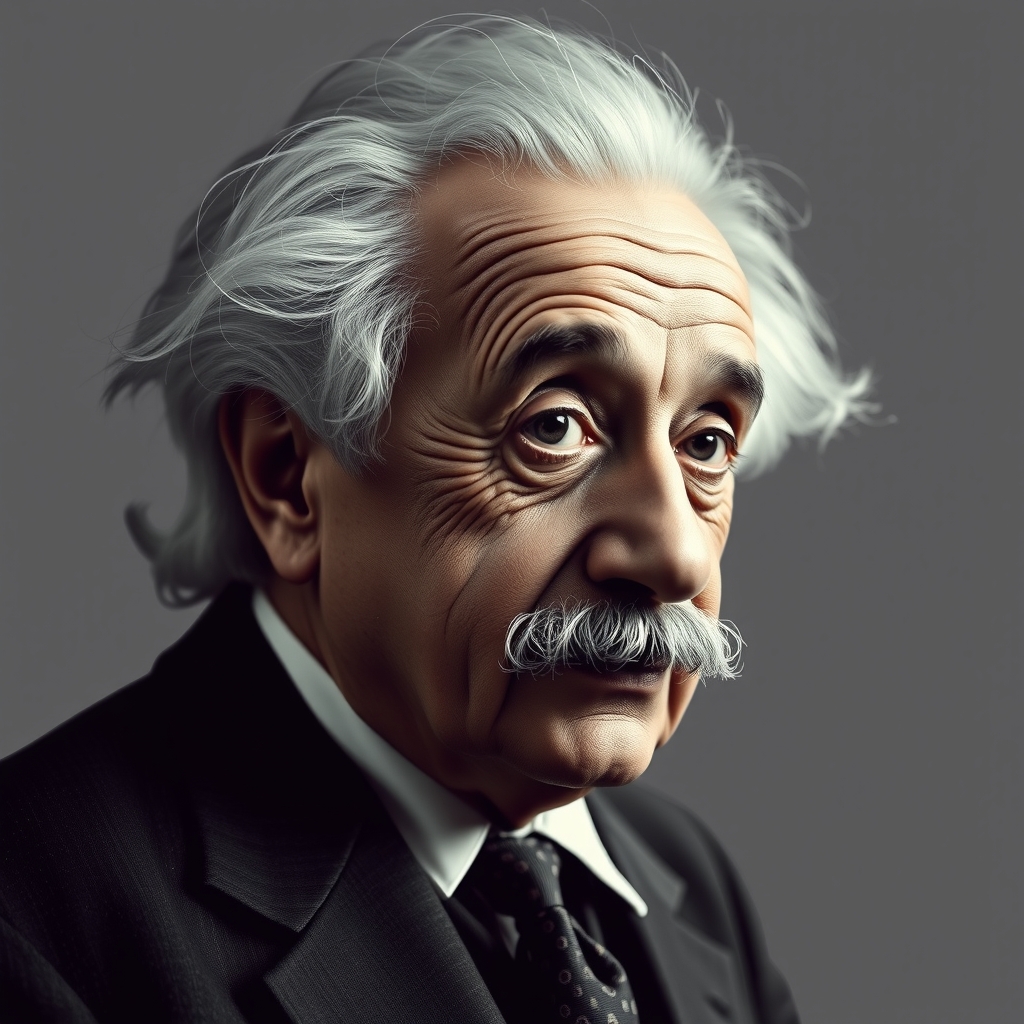
Albert Einstein remains one of the most influential scientific figures in history, renowned for reshaping our understanding of physics, space, time, and gravity. Beyond his groundbreaking academic achievements, his thoughtful reflections on curiosity, imagination, and human nature continue to inspire generations across the globe.
Verified Quotes by Albert Einstein
“Imagination is more important than knowledge. For knowledge is limited, whereas imagination embraces the entire world, stimulating progress, giving birth to evolution.”
Source: Interview with George Sylvester Viereck (1929)
“The important thing is not to stop questioning. Curiosity has its own reason for existence. One cannot help but be in awe when he contemplates the mysteries of eternity, of life, of the marvelous structure of reality.”
Source: LIFE Magazine (1955)
“Two things are infinite: the universe and human stupidity; and I'm not sure about the universe.”
Source: Attributed in various biographical collections and personal reminiscences by contemporaries, widely cited
“Life is like riding a bicycle. To keep your balance, you must keep moving.”
Source: Letter to his son Eduard Einstein (1930)
About Albert Einstein
Albert Einstein was born in Ulm, in the Kingdom of Württemberg in the German Empire, in 1879. From an early age, he showed a deep fascination with mathematics and science, eventually developing the special and general theories of relativity. His famous equation, E=mc squared, revolutionized theoretical physics by establishing the equivalence of mass and energy.
In 1921, Einstein was awarded the Nobel Prize in Physics for his explanation of the photoelectric effect, which laid foundational principles for the development of quantum theory. Fleeing the rise of the Nazi regime in Germany in the 1930s, he settled in the United States, taking a position at the Institute for Advanced Study in Princeton, New Jersey, where he spent the remainder of his career.
Alongside his immense scientific contributions, Einstein was a passionate advocate for peace, civil rights, and international cooperation. He utilized his global platform to speak out against nationalism, militarism, and nuclear proliferation, leaving behind a legacy defined equally by rigorous intellectual inquiry and a deep compassion for humanity.
Conclusion
Albert Einstein's profound words capture the essence of a curious mind driven by wonder and imagination. His enduring legacy reminds us that asking questions and embracing continuous learning are essential elements of both scientific discovery and personal growth.